Discover Essaouira beyond the beach: a refined Atlantic escape shaped by medina culture, ocean views, seafood, art, boutique riads and a slower rhythm of Moroccan life.
Essaouira is often described as a beach town, but that label is far too small for what the city offers. Set on Morocco’s Atlantic coast, Essaouira is a place of sea wind, whitewashed walls, blue doors, fortified ramparts, working fishing boats, art galleries, music, seafood and relaxed elegance.
Unlike Marrakech or Fez, Essaouira does not overwhelm at first sight. Its charm is quieter. The medina is compact and easier to explore, the pace is softer, and the Atlantic breeze gives the city a feeling of openness. For travellers looking for a refined Morocco itinerary, Essaouira offers a beautiful contrast to the energy of the imperial cities and the intensity of the desert.
The city’s medina is a UNESCO-listed historic centre, but it feels lived-in rather than frozen in time. Narrow streets lead to small workshops, cafés, galleries, spice shops, local bakeries and boutique riads. The architecture reflects a mix of Moroccan, Portuguese and coastal influences, giving Essaouira a character that feels distinct from anywhere else in the country.
One of the best ways to experience Essaouira is simply to walk. Start in the medina, follow the streets towards the ramparts, pause near the old sea walls, then continue towards the fishing port and beach. The city rewards slow exploration. There is no need to rush from monument to monument. The atmosphere itself is the main attraction.
The ramparts are among Essaouira’s most iconic sights. Facing the Atlantic, they offer dramatic views of waves, rocks, seagulls and the old city walls. They are especially beautiful in the late afternoon, when the light becomes softer and the city takes on a golden tone. For photographers and travellers who appreciate atmosphere, this is one of the most memorable settings on Morocco’s coast.
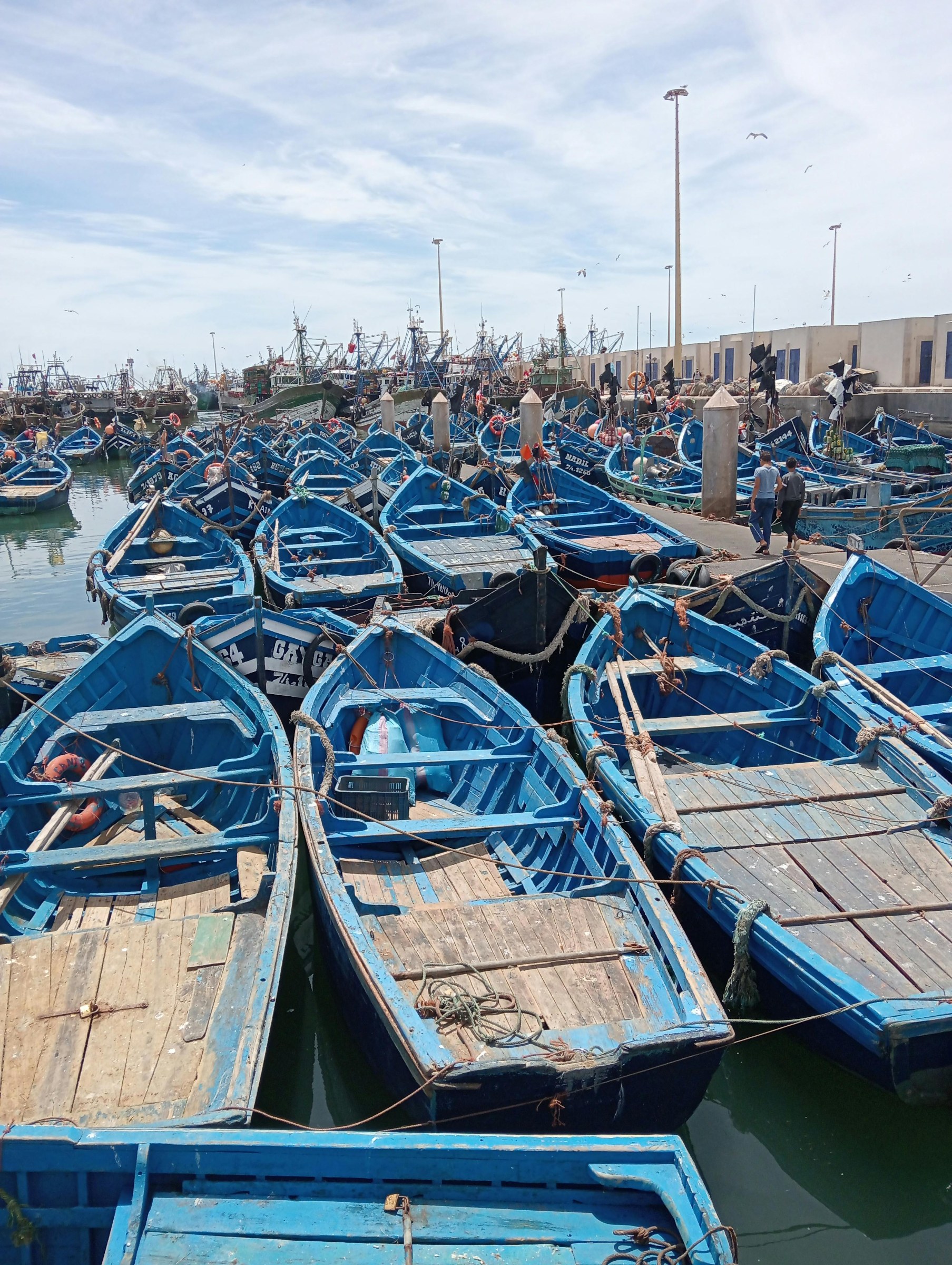
The fishing port is another essential part of the Essaouira experience. It is active, colourful and full of movement, with blue boats, fishermen unloading their catch and seafood stalls nearby. For travellers who enjoy food and local life, the port offers a direct connection to the city’s maritime identity.
Seafood is one of Essaouira’s great pleasures. Fresh fish, grilled sardines, seafood pastilla, calamari and simple coastal meals are part of the city’s rhythm. A good Essaouira itinerary should leave time for a long seafood lunch, ideally without overplanning the afternoon afterwards. The city is made for lingering.
Essaouira is also known for its artistic spirit. The medina is home to galleries, craft shops, woodwork studios and small creative spaces. Thuya wood craftsmanship is particularly associated with the region, and visitors will find carved boxes, furniture and decorative objects throughout the old town. For travellers interested in design, craft and local materials, Essaouira offers a softer and more intimate shopping experience than larger cities.
Music is another part of the city’s identity. Essaouira is closely linked with Gnaoua culture, and its annual music festival has helped make the city internationally known. Even outside festival season, travellers may encounter live music in intimate venues, riads or cultural spaces. This musical heritage adds depth to the city and makes it more than a coastal stop.
The beach is, of course, part of Essaouira’s appeal. Long, wide and windswept, it is ideal for walking, horse riding, camel rides, kitesurfing and windsurfing. It is not always a classic sunbathing beach because the wind can be strong, but that is exactly what gives Essaouira its character. The beach is best understood as a landscape for movement, views and fresh air.
For active travellers, Essaouira is one of Morocco’s best destinations for kitesurfing and wind-based sports. Beginners can take lessons, while experienced travellers can make the most of the Atlantic conditions. For softer adventure, a beach walk, private horse ride or coastal excursion can be a more relaxed way to enjoy the landscape.
Essaouira also works beautifully as a wellness stop within a Morocco itinerary. After days in Marrakech, the Atlas Mountains or the Sahara, the coast offers a welcome pause. Boutique riads, hammams, sea air, slow breakfasts, rooftop terraces and gentle walks create a sense of recovery. For high-end travellers, Essaouira can be a place to slow down without losing cultural substance.
The best time to visit Essaouira depends on the type of experience you want. Spring and autumn are especially pleasant, with mild weather and comfortable conditions for exploring. Summer is cooler than Marrakech thanks to the Atlantic breeze, making it a good option when inland cities are hot. Winter can also be enjoyable, especially for travellers who prefer fewer crowds and a quieter atmosphere.
Essaouira is often included as a two-night stay, but travellers with more time may appreciate three nights. One night is usually too short, as the city’s charm comes from its slower rhythm. With two or three nights, you can explore the medina, enjoy the ramparts, visit the port, take a coastal walk, experience a hammam, try seafood and still have time to do very little — which is part of the point.
From Marrakech, Essaouira is usually reached by road. The journey makes it easy to combine the two destinations in a tailor-made itinerary. Many travellers visit Essaouira after Marrakech, using the coast as a softer ending to the trip. It can also be combined with the Atlas Mountains, Agafay or a longer journey through southern Morocco.
For luxury travellers, Essaouira’s appeal lies in understated elegance rather than extravagance. The city is not about grand palaces or formal glamour. Its luxury is found in ocean views, privacy, characterful riads, fresh food, good guiding, quiet terraces and a pace that allows travellers to breathe.
Choosing the right accommodation matters. A boutique riad inside the medina offers atmosphere and walkable access to the city, while properties outside the walls may provide more space, gardens or sea views. The right choice depends on whether you want immersion, calm, comfort or a combination of all three.
A private guide can help reveal Essaouira’s layers, especially for travellers interested in history, craft, architecture, Jewish heritage, music or local food. While the medina is easy to explore independently, a thoughtful guide can turn a pleasant walk into a richer cultural experience.
Essaouira is also a good destination for families and multi-generational travellers. The medina is more manageable than larger cities, the beach gives space to move, and the atmosphere is generally relaxed. With the right pacing, it can suit travellers who want culture without constant intensity.
What makes Essaouira special is its balance. It is coastal but cultural, relaxed but not empty, artistic but not artificial, historic but still alive. It offers a different expression of Morocco — one shaped by the Atlantic, by trade, by music, by craft and by a slower way of moving through the day.
For travellers planning a refined journey through Morocco, Essaouira should not be treated as a simple beach extension. It deserves to be understood as a destination in its own right: a place to walk, taste, listen, watch the sea, meet artisans and experience a calmer side of Moroccan life.
Essaouira is more than a beach town. It is one of Morocco’s most atmospheric coastal cities, and for many travellers, it becomes the place where the journey finally slows down enough to be fully felt.
Frequently asked questions
Practical answers about this guide and planning your trip.
About the author
Emma Costa writes for MoroccoByInsiders on routes, culture, and practical planning across the kingdom.